
Last Updated: June 2026 | Reading Time: 8 minutes
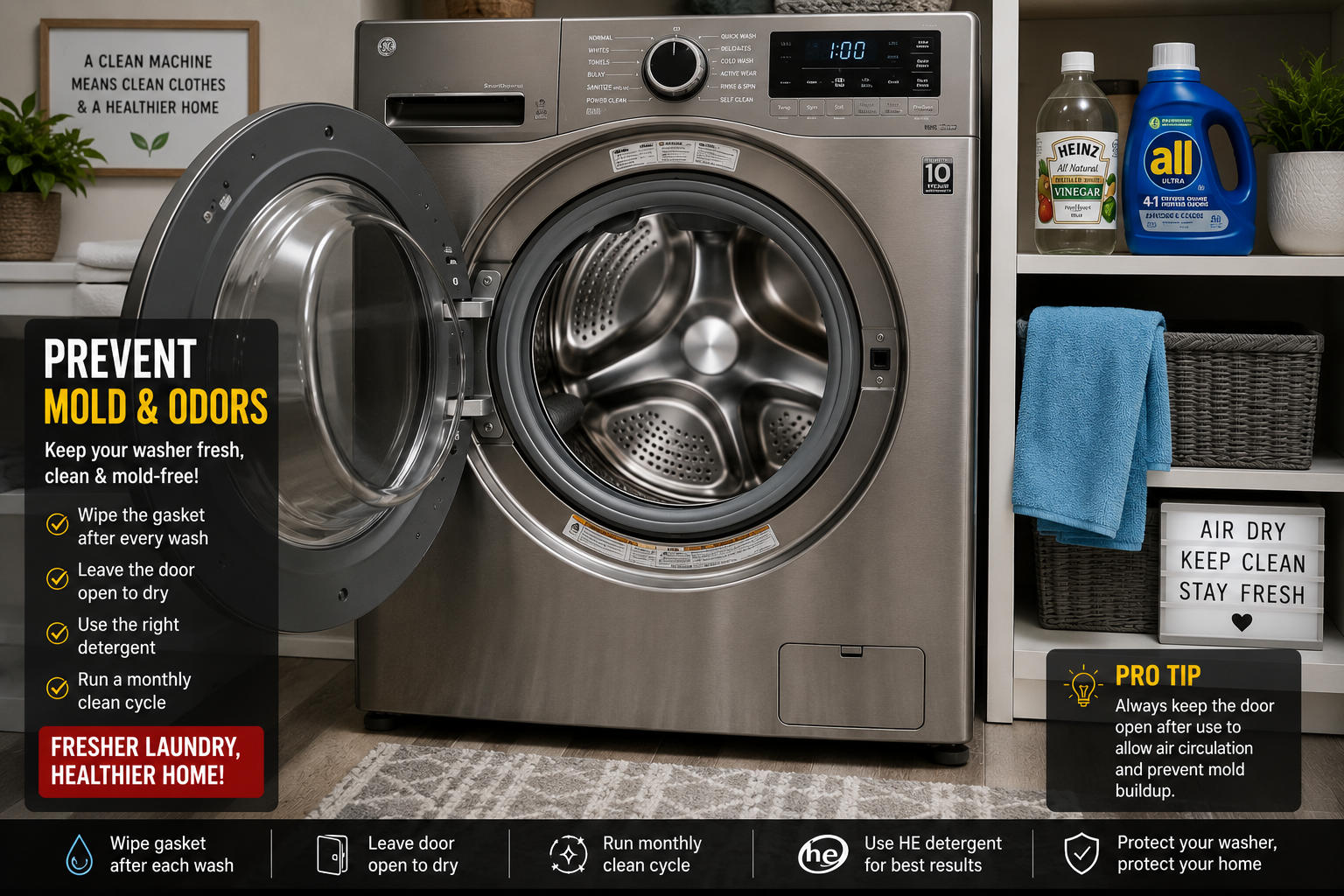
Do you know how to prevent washing machine mold? If you have a front-load washing machine — or even a top-loader — mold and mildew are a constant threat. A washing machine that develops mold does not just smell bad. It transfers mold spores and bacteria directly onto your clothes, leaving them smelling musty even immediately after washing. For allergy sufferers, mold in the washing machine can be a genuine health concern.
The good news is that preventing washing machine mold is entirely achievable with a few simple daily habits and a monthly cleaning routine. In this complete guide, we will show you exactly how to prevent washing machine mold and mildew permanently — covering everything from daily habits to the best products to use.
Why Washing Machines Develop Mold
Understanding why mold grows in washing machines helps you prevent it more effectively:
- Warm and moist environment — washing machines are the ideal environment for mold growth. The drum stays warm and moist after every cycle — perfect conditions for mold spores to germinate and spread
- Detergent and fabric softener residue — excess detergent and softener leave a sticky film inside the drum, door seal, and dispenser that provides nutrients for mold
- Closed door after washing — leaving the door closed traps moisture inside the drum with no air circulation — the single biggest cause of washing machine mold
- Low-temperature washes — most modern washing is done at 30°C–40°C. These temperatures clean clothes effectively but do not kill mold spores the way a 90°C wash does
- HE detergent overuse — using too much detergent — even HE detergent — leaves excessive residue that feeds mold
Why front-loaders are more prone to mold than top-loaders:
Front-load washers have a rubber door seal with deep folds that trap water, lint, and detergent residue after every cycle. This creates a persistently moist, dark environment that is ideal for mold. Top-load washers have an open top that allows the drum to dry naturally — dramatically reducing mold risk.
The 5 Daily Habits That Prevent Washing Machine Mold
These five habits take less than 2 minutes combined after every wash — but they make the difference between a mold-free machine and a machine that develops mold within weeks.
Habit 1: Always Leave the Door Open After Washing
This is the single most important habit for preventing washing machine mold.

After every wash cycle, leave the washing machine door wide open for at least 1–2 hours. This allows air to circulate through the drum, evaporating the moisture that mold needs to grow.
For front-loaders, leave the door ajar — not just slightly cracked. The door needs to be open enough to allow real airflow into the drum.
For top-loaders, leave the lid fully open after every wash.
If you share a laundry space and leaving the door fully open is a safety concern (children or pets), use a door prop or strap to hold the door slightly open while still preventing full access.
Habit 2: Wipe the Door Seal Dry After Every Wash (Front-Loaders)

The rubber door seal is where mold almost always starts in a front-load washer. After every wash cycle, spend 30 seconds wiping the door seal dry with a clean cloth — pulling back the folds to dry the hidden areas inside.
This one 30-second habit prevents the majority of front-loader mold problems. Most people who struggle with washing machine mold have never done this.
Habit 3: Remove Laundry Immediately After the Cycle Ends
Leaving wet clothes sitting in the drum after the cycle ends keeps the drum moist for longer — and provides additional nutrients for mold growth. Always remove clothes immediately when the cycle finishes.
If you cannot be present when the cycle ends, use the delay start function to time the cycle to finish when you are available.
Habit 4: Use the Correct Amount of Detergent

Using too much detergent is one of the most common causes of washing machine mold. Excess detergent does not fully rinse away — it coats the drum, door seal, and hoses with a sticky residue that provides nutrients for mold and bacteria.
Use half the amount recommended on the detergent packaging. Modern washing machines and concentrated detergents need far less than the package suggests. If you use pods or tablets, use one per load regardless of load size.
For front-loaders and HE top-loaders, always use HE-specific detergent — regular detergent creates too many suds that cannot fully rinse away.
Habit 5: Avoid Fabric Softener or Use It Sparingly
Liquid fabric softener leaves a waxy residue inside the drum, door seal, and dispenser that is particularly good at feeding mold. Consider switching to:

- Dryer sheets instead of liquid softener — no residue in the machine
- White vinegar as a natural fabric softener — pour half a cup into the softener dispenser. It softens clothes, reduces static, and actively prevents mold rather than promoting it
- Reduced amounts — if you use liquid softener, use half the recommended amount
The Monthly Cleaning Routine That Eliminates Mold
Daily habits prevent mold from developing — but a monthly cleaning routine eliminates any mold that does manage to establish itself and keeps every component of the machine fresh.
Monthly Task 1: Clean the Door Seal Thoroughly (Front-Loaders)
Even with daily wiping, the deep folds of the door seal need a thorough monthly scrub:

- Mix equal parts white vinegar and warm water in a spray bottle
- Spray generously into all the folds of the door seal
- Use an old toothbrush to scrub every fold — work all the way around the seal
- Pay particular attention to the bottom of the seal where water pools
- Wipe clean with a damp cloth
- Dry thoroughly with a dry cloth
- Leave the door open for at least 1 hour
For established black mold that will not shift with vinegar:
- Mix 1 tablespoon of bleach in 1 cup of water
- Apply to the moldy areas with a cloth or toothbrush
- Leave for 5 minutes
- Scrub thoroughly and wipe clean
- Rinse with clean water
- Never mix bleach and vinegar — use one or the other, never both
Monthly Task 2: Run a Hot Drum Cleaning Cycle
A monthly hot cleaning cycle kills mold spores, dissolves detergent residue, and freshens the entire machine:

Method 1 — White vinegar:
- Pour 2 cups of white vinegar directly into the drum (not the dispenser)
- Run the hottest cycle available — 90°C or the sanitary/drum clean cycle
- Once done, sprinkle half a cup of baking soda into the drum
- Run another hot cycle
- Leave the door open to dry
Method 2 — Washing machine cleaner tablet:
- Place one Affresh, Dettol, or similar cleaning tablet directly into the drum
- Run the hottest cycle available with no clothes
- These tablets are formulated specifically for mold and bacteria elimination
Method 3 — Bleach (for severe mold):
- Add half a cup of chlorine bleach to the bleach dispenser (not the drum directly)
- Run a hot empty cycle
- Run a second hot cycle with no bleach to rinse
- Never combine bleach with any other cleaning agent
Monthly Task 3: Clean the Detergent Drawer

- Remove the drawer completely
- Rinse under warm water and scrub all compartments with a toothbrush and dish soap
- Clean the drawer housing inside the machine with a damp cloth and bottle brush
- Allow to dry completely before reinserting
- Leave the drawer slightly open between washes to allow it to dry
Monthly Task 4: Clean the Drain Filter

- Access the filter behind the small panel at the bottom front of the machine
- Place towels and a tray to catch water
- Slowly unscrew the filter and let water drain
- Remove the filter and scrub under running water
- Reinstall firmly
The Best Products for Preventing Washing Machine Mold
| Product | How It Helps | Cost |
|---|---|---|
| HE detergent | Produces fewer suds — less residue for mold | $8–$15 |
| White vinegar | Natural anti-mold agent — use in softener dispenser | $2–$3 |
| Affresh cleaning tablets | Monthly drum clean — kills mold and bacteria | $8–$12 |
| Washing machine door prop | Keeps door ajar automatically | $10–$15 |
| Microfiber cloth | For drying door seal after every wash | $5–$10 |
| Washing machine cleaner spray | For door seal and drum between monthly cleans | $8–$12 |
How to Remove Existing Mold Before Starting Prevention
If your washing machine already has visible mold, remove it completely before starting the prevention routine — otherwise mold will continue to spread from existing colonies.
Step 1: Clean the door seal
Use the bleach solution method described above — this is the most effective treatment for established black mold in rubber seals.
Step 2: Run a bleach cleaning cycle
Add half a cup of bleach to the dispenser and run the hottest cycle available — this kills mold throughout the drum, pump, and internal hoses.
Step 3: Run a vinegar cycle
Follow the bleach cycle (the next day — never mix bleach and vinegar) with a vinegar cycle to neutralize any remaining bleach and add ongoing anti-mold protection.
Step 4: Replace the door seal if mold is severe
If the rubber door seal has extensive mold penetration that does not clean up with scrubbing — particularly if you see mold under or through the rubber — the seal needs replacing. A new door seal costs $30–$80 depending on the machine model.
Washing Machine Mold Prevention for Specific Situations
Shared laundry (apartment building):
- Always remove clothes immediately when your cycle ends
- You cannot control the door between your washes — run a monthly cleaning cycle without fail
- Use a door strap or wedge to keep the door ajar when the machine is not in use
Laundry room in a basement or humid area:
- Run a dehumidifier in the laundry room — high ambient humidity accelerates mold growth
- Increase the frequency of cleaning cycles to twice monthly
- Leave the door open as long as possible between washes
Households with young children or pets:
- Use a door prop specifically designed for washing machines — keeps the door slightly open without creating a hazard
- Child safety locks can be installed on the door while still allowing ventilation
Signs Your Prevention Routine Is Working
You know your mold prevention routine is working when:
- ✅ No musty smell when you open the machine door
- ✅ No black spots visible in the door seal folds
- ✅ Clothes smell fresh immediately out of the machine
- ✅ No grey or white residue on clothes after washing
- ✅ The drum interior looks clean and bright
Prevention Tips Summary
| Frequency | Task |
|---|---|
| After every wash | Leave door/lid open for 1–2 hours |
| After every wash | Wipe door seal dry (front-loaders) |
| After every wash | Remove laundry immediately |
| Every wash | Use correct — reduced — amount of HE detergent |
| Every wash | Use vinegar instead of fabric softener |
| Monthly | Scrub door seal with vinegar or toothbrush |
| Monthly | Run hot drum cleaning cycle |
| Monthly | Clean detergent drawer |
| Every 1–3 months | Clean drain filter |
Frequently Asked Questions
Q: Why does my front load washer smell like mold even after cleaning?
A: The mold has likely penetrated deep into the folds of the door seal or has established itself inside the outer drum behind the visible drum. For persistent mold after cleaning the seal and running a cleaning cycle, try a bleach cycle — and if that does not work, the door seal may need replacing.
Q: Is washing machine mold dangerous?
A: Washing machine mold can be a health concern — particularly for people with mold allergies, asthma, or weakened immune systems. Mold spores transfer to clothes during washing and can cause skin irritation, allergic reactions, and respiratory issues. Children and elderly household members are most susceptible.
Q: Can I use bleach every month to prevent mold?
A: Yes — a monthly bleach cycle is effective at preventing mold. However, frequent bleach use can degrade rubber components over time. Alternating between a bleach cycle and a vinegar cycle each month provides effective prevention with less wear on rubber seals.
Q: Does using cold water cause more mold in washing machines?
A: Yes — cold water washes do not kill mold spores the way hot water does. Run at least one hot wash (60°C or higher) per week to kill mold spores before they can establish colonies. Monthly cleaning cycles at 90°C are particularly effective.
Q: How do I stop my washing machine from smelling musty permanently?
A: The permanent solution is combining three habits: always leaving the door open after washing, wiping the seal dry after every cycle, and running a monthly cleaning cycle. These three steps, done consistently, eliminate washing machine mold permanently for the vast majority of households.
When to Call a Professional
Call a technician if:
- Mold has penetrated deep into the outer drum and cannot be reached with cleaning cycles
- The door seal needs replacing due to severe mold damage
- The machine continues to smell despite consistent cleaning and prevention
- You notice mold growing in the drum walls or ceiling of the machine
Final Thoughts
Preventing washing machine mold comes down to three simple principles — remove moisture after every wash, clean monthly, and use the right amount of the right detergent. The daily habits take under 2 minutes and the monthly cleaning takes under 30 minutes. Combine these consistently and your washing machine will never develop mold — and your clothes will always come out smelling fresh.
Has this guide helped you solve your washing machine mold problem? Leave a comment and tell us which habit made the biggest difference for you!
Leave a Reply