
Last Updated: June 2026 | Reading Time: 8 minutes
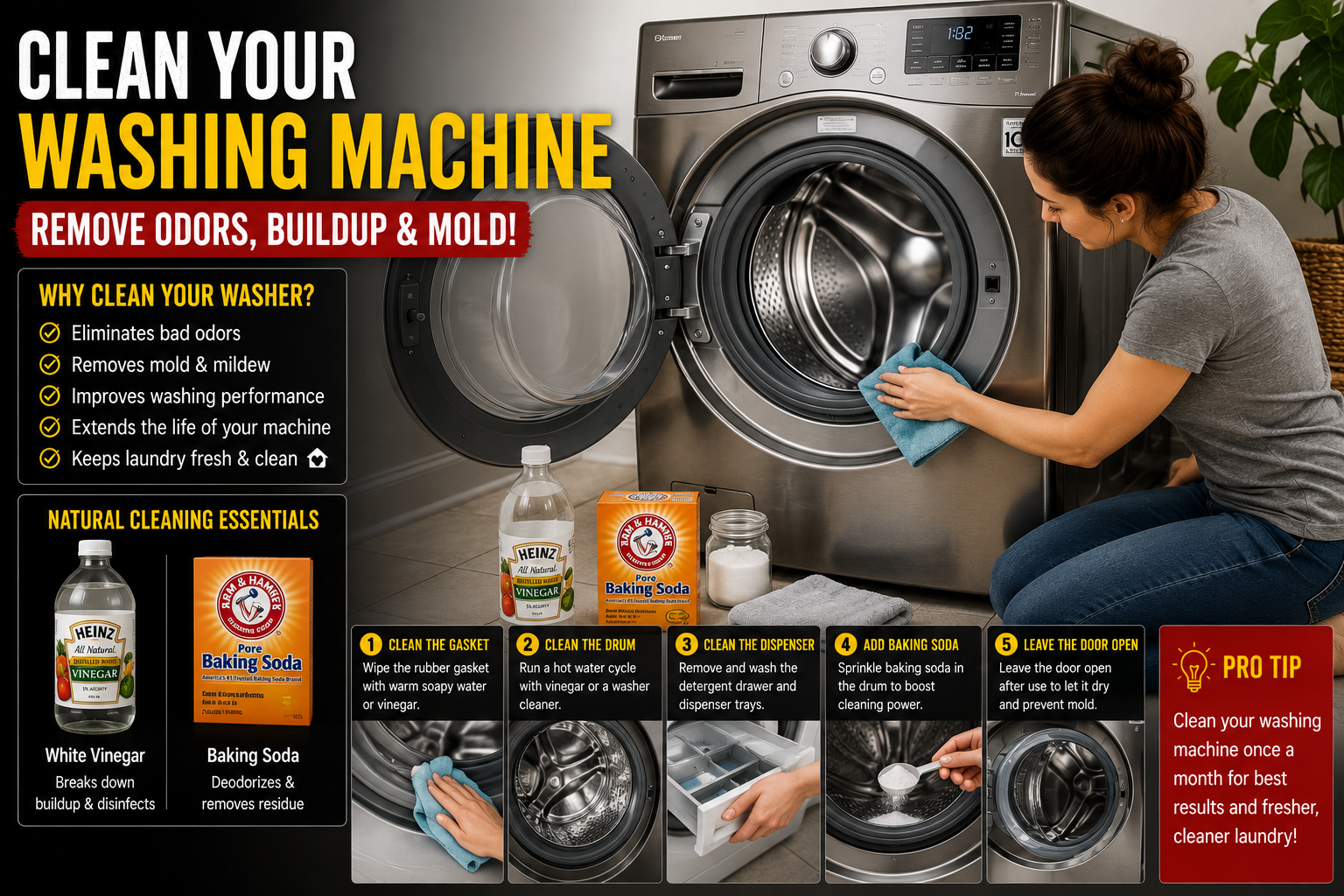
Do you know how to clean a washing machine properly? Most people assume that a machine that washes clothes must be cleaning itself in the process — but nothing could be further from the truth. Washing machines accumulate detergent residue, fabric softener buildup, mineral scale, mold, mildew, and bacteria with every single cycle. Without regular cleaning, your washing machine becomes a source of bad odors, poor cleaning performance, and potentially harmful bacteria transferring onto your clothes.
In this complete guide, we will show you exactly how to clean a washing machine inside and out — covering both front-load and top-load machines — with step-by-step instructions and the best cleaning methods for every component.
Why Cleaning Your Washing Machine Matters
Here is what builds up inside a washing machine that is never cleaned:
- Detergent and fabric softener residue — coats the drum, gasket, and dispenser drawer with a sticky film that traps bacteria
- Mineral scale — calcium and magnesium from hard water deposit on the heating element and drum surfaces
- Mold and mildew — thrive in the warm, moist environment of the drum and door seal
- Bacteria — including E. coli and other harmful strains found in underwear and workout clothes can survive in a dirty washing machine and transfer to other garments
- Lint and debris — accumulate in the filter, pump, and around the drum
Signs your washing machine needs cleaning:
- Clothes smell musty even after washing
- Visible black mold in the door seal
- White or grey residue on clothes after washing
- Bad smell when you open the machine door
- The machine itself has never been cleaned
What You Need
- White vinegar
- Baking soda
- Mild dish soap
- An old toothbrush
- Microfiber cloths
- A spray bottle
- Washing machine cleaner tablet (optional — Affresh or similar, $5–$10)
How to Clean a Front-Load Washing Machine
Front-load washing machines are more prone to mold and mildew than top-loaders because the door seal creates a dark, moist environment that is perfect for mold growth. Here is a complete cleaning routine:
Part 1: Clean the Door Seal (Gasket)
The door seal is the most important component to clean in a front-load washer — and the one most commonly neglected. The rubber folds of the gasket trap water, lint, hair, and detergent residue after every cycle, creating the ideal environment for black mold.

- Open the washing machine door fully
- Pull back the rubber door seal folds to expose the hidden areas inside
- Inspect for visible black mold, debris, and residue
- Mix equal parts white vinegar and warm water in a spray bottle
- Spray generously into all the folds of the seal
- Use an old toothbrush to scrub away all visible mold and residue — work your way all the way around the seal
- Wipe clean with a damp microfiber cloth
- For severe mold, apply undiluted white vinegar and leave for 30 minutes before scrubbing
- Dry the seal thoroughly with a dry cloth
- Leave the door open for at least 1 hour to allow the seal to air dry completely
Pro Tip: After every wash cycle, take 30 seconds to wipe the door seal dry with a cloth and leave the door slightly ajar. This single habit prevents mold from growing in the first place and is the single most effective thing you can do to keep a front-load washer fresh.
Part 2: Clean the Detergent Drawer

- Pull the detergent drawer out completely — most have a release button or tab that allows full removal
- Rinse under warm running water to remove loose residue
- Use an old toothbrush and dish soap to scrub all compartments thoroughly — the fabric softener compartment accumulates the most residue
- Pay attention to the siphon cap inside the softener compartment — remove it and clean underneath
- Rinse until the water runs completely clear
- Check inside the drawer housing in the machine — use a damp cloth or bottle brush to clean the cavity where the drawer sits
- Allow the drawer to dry completely before reinserting
Part 3: Clean the Drum
Method 1 — White vinegar and baking soda (free):

- Pour 2 cups of white vinegar directly into the drum — not into the detergent drawer
- Run the hottest, longest wash cycle available — 90°C or the sanitary cycle if your machine has one
- Once the cycle completes, sprinkle half a cup of baking soda directly into the drum
- Run another hot wash cycle
- Leave the door open after the cycle to allow the drum to air dry
Method 2 — Washing machine cleaner tablet ($5–$10):
- Place one Affresh or similar cleaning tablet directly into the drum
- Run the hottest wash cycle available with no clothes
- The tablet dissolves slowly throughout the cycle, cleaning the drum, pump, and internal hoses
- Leave the door open after to air dry
Part 4: Clean the Drain Filter

- Locate the drain filter — on front-loaders it is behind a small access panel at the bottom front of the machine
- Place a shallow tray and towels under the filter panel to catch water
- Slowly unscrew the filter cap — water will flow out
- Remove the filter completely
- Rinse under warm running water and scrub away all debris with a brush
- Check the filter housing for any remaining debris and remove it
- Reinstall the filter securely and close the panel
Part 5: Clean the Exterior

- Mix warm water with a few drops of dish soap in a spray bottle
- Spray and wipe down the entire exterior — top, sides, front, and back
- Use a damp cloth to wipe the control panel — do not spray directly onto controls
- Clean behind the machine if accessible — lint and dust accumulate here
- Wipe the power cord and water inlet hoses
- Dry everything with a clean dry cloth
How to Clean a Top-Load Washing Machine
Top-load washers are generally easier to clean than front-loaders because they do not have a door seal where mold accumulates — but they still need regular attention to the drum, agitator, dispenser, and filter.
Part 1: Clean the Drum and Agitator
With agitator:

- Set the machine to the hottest water temperature and largest load size
- Start filling with water — then add 4 cups of white vinegar directly into the water
- Allow the machine to agitate for 1 minute — then pause and let it soak for 1 hour
- While soaking, use a cloth soaked in the vinegar water to clean the inside of the drum walls, the top of the agitator, and the underside of the lid
- After 1 hour, resume and let the cycle complete
- Run a second cycle with half a cup of baking soda added to the drum
- Leave the lid open after to air dry
Without agitator (high-efficiency top-loader):
- Add 2 cups of white vinegar directly into the drum
- Run the hottest, longest cycle available
- Run a second cycle with half a cup of baking soda
- Leave the lid open to dry
Part 2: Clean the Detergent and Softener Dispenser
Top-load dispensers vary by model — some are removable, some are built into the drum:

- If removable, take the dispenser out and wash with warm soapy water and a toothbrush
- If built in, use a damp cloth and toothbrush to clean inside the dispenser cup
- Rinse thoroughly to remove all detergent and softener residue
Part 3: Clean the Lid and Hinges
- Wipe the underside of the lid — residue and mildew accumulate here
- Clean the lid hinges with a damp cloth — debris collects in the hinge area
- Check the rim of the drum opening for any residue or mold

Part 4: Clean the Filter (If Accessible)
Not all top-loaders have an accessible filter — check your machine manual to confirm location:
- Common locations: inside the drum near the agitator, behind the front kick panel, or at the end of the drain hose
- Remove and clean the filter using the same process described for front-loaders above

Part 5: Clean the Exterior
Follow the same exterior cleaning process as described for front-load machines above.

How Often Should You Clean Your Washing Machine?
| Cleaning Task | Frequency |
|---|---|
| Wipe door seal dry (front-loader) | After every wash |
| Leave door/lid open after washing | After every wash |
| Clean detergent drawer | Monthly |
| Clean door seal (front-loader) | Monthly |
| Run drum cleaning cycle | Monthly |
| Clean drain filter | Every 1–3 months |
| Clean exterior | Monthly |
| Deep clean entire machine | Every 3 months |
The Best Products for Cleaning a Washing Machine
| Product | Best For | Cost |
|---|---|---|
| White vinegar | Mineral scale, odors, bacteria | $0 (most households have it) |
| Baking soda | Odors and mild residue | $1–$2 |
| Affresh tablets | Convenient drum cleaning | $5–$10 |
| Washing machine cleaner (Dettol, HG) | Heavy mold and bacteria | $8–$15 |
| Bleach (diluted) | Severe mold in drum | $2–$5 |
Common Washing Machine Cleaning Mistakes to Avoid
- Never use regular dish soap in the drum — it creates enormous suds that can damage the pump and electronics
- Never use bleach and vinegar together — this combination produces toxic chlorine gas
- Never leave the door closed after a wash — moisture trapped inside promotes mold growth
- Never skip the drain filter — a clogged filter causes drainage problems and is a major source of bad odors
- Never use too much detergent — excess detergent is the primary source of residue buildup — use half the recommended amount
Prevention Tips — Keep Your Washing Machine Clean Long Term
- Leave the door or lid open for at least 1 hour after every wash — always
- Wipe the front-load door seal dry after every cycle — takes 30 seconds
- Remove and clean the detergent drawer monthly
- Use the correct type of detergent — HE detergent for HE machines
- Use half the recommended detergent amount — modern detergents are highly concentrated
- Run a hot cleaning cycle monthly — either with vinegar or a cleaner tablet
- Clean the drain filter every 1–3 months
- Check pockets before loading — coins, tissues, and small items damage the pump and filter
Frequently Asked Questions
Q: How often should you clean a washing machine? A: Run a drum cleaning cycle once a month and clean the door seal, detergent drawer, and drain filter every 1–3 months. If you do laundry daily or have pets, clean more frequently. A quick daily habit — leaving the door open and wiping the seal dry — prevents the majority of odor and mold problems.
Q: Can I use bleach to clean my washing machine? A: Yes — diluted bleach is effective for killing mold and bacteria in the drum. Use half a cup of bleach in a hot empty cycle. Never mix bleach with vinegar — this produces toxic chlorine gas. Run a plain water rinse cycle after using bleach before washing clothes again.
Q: Why does my washing machine smell even after cleaning? A: If the smell persists after cleaning the drum, the source is likely in the door seal folds, drain filter, or inside the detergent drawer housing. Clean these three areas thoroughly — particularly pulling back all folds of the door seal and scrubbing with an old toothbrush.
Q: Is it safe to use vinegar to clean a washing machine? A: Yes — white vinegar is safe and effective for cleaning washing machines. It dissolves mineral scale, kills bacteria, and neutralizes odors. Use it in the drum for a cleaning cycle and to scrub the door seal and detergent drawer. Some manufacturers advise against using vinegar in certain rubber gaskets over time — check your machine manual if you are concerned.
Q: How do I clean a top-load washing machine without an agitator? A: Add 2 cups of white vinegar directly to the drum and run the hottest, longest cycle available. Follow with a second cycle using half a cup of baking soda. Leave the lid open to air dry after. These high-efficiency top-loaders also benefit from a monthly cleaning tablet specifically designed for HE machines.
When to Call a Professional
If your washing machine continues to smell bad or underperform after a thorough deep clean:
- The drain pump may have a blockage that requires professional access
- Mold may have penetrated the outer tub and drum — beyond what a cleaning cycle can reach
- The door seal may need replacing — particularly if mold has permanently stained or degraded the rubber
- A service technician can also descale the heating element if mineral buildup is severe
Final Thoughts
Knowing how to clean a washing machine properly is one of the most valuable home maintenance skills you can have. A monthly drum cleaning cycle, regular door seal wipe-downs, and a quarterly drain filter clean are all you need to keep your machine performing at its best, smelling fresh, and lasting years longer. Start today — run a hot vinegar cycle, scrub the door seal, and clean the detergent drawer. You will immediately notice the difference.
Did this guide help you clean your washing machine? Leave a comment and tell us how dirty it was and which method worked best for you!
Leave a Reply