
Last Updated: June 2026 | Reading Time: 8 minutes
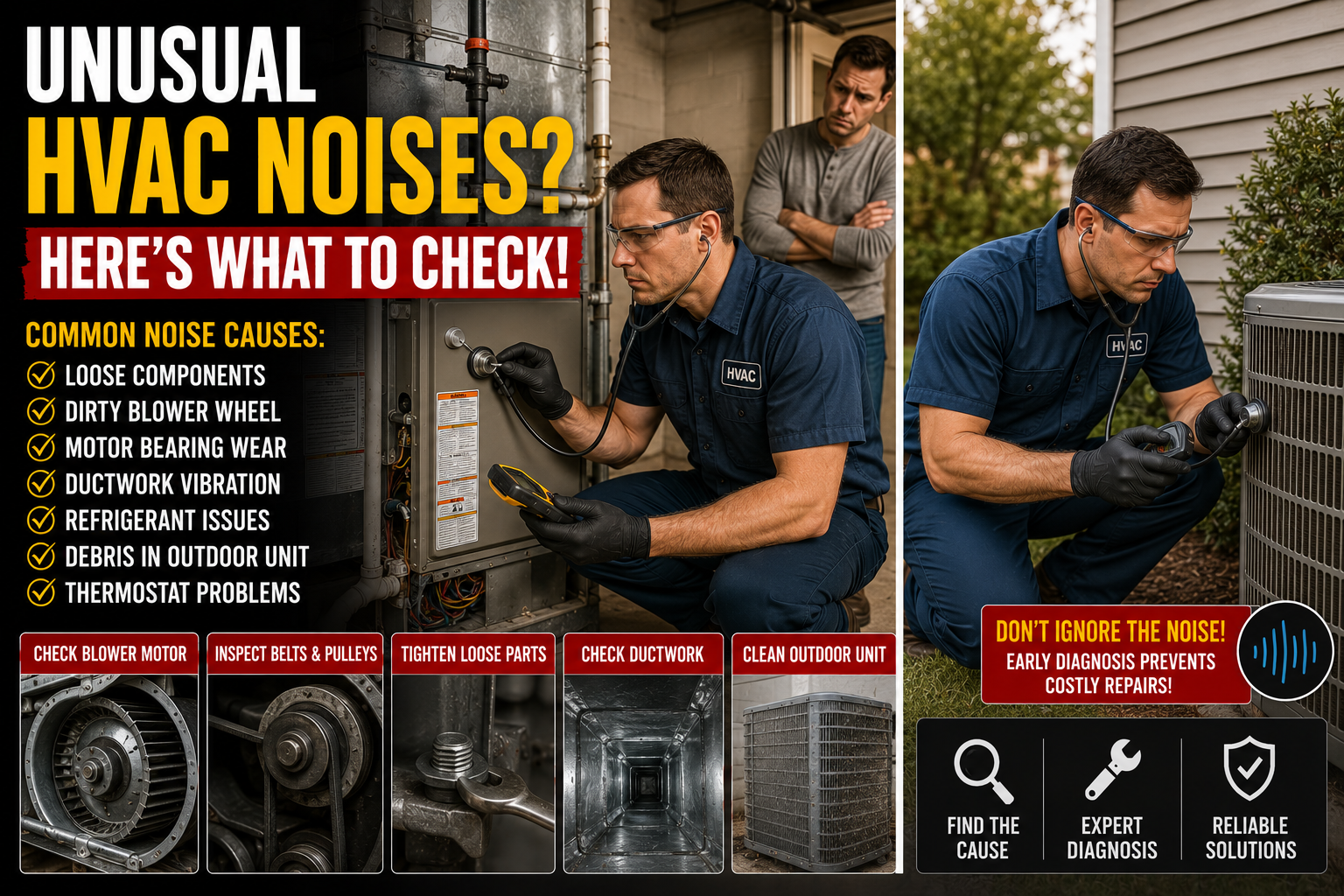
Is your HVAC system making a strange noise that it never made before — banging, squealing, rattling, or clicking? An HVAC system that suddenly starts making unusual sounds is one of the most common homeowner concerns, and for good reason. Some HVAC noises are completely harmless, while others are urgent warning signs that need immediate attention.
In this guide, we’ll explain exactly what each HVAC noise means, whether you should be concerned, and what to do about it.
Is It Normal for an HVAC System to Make Noise?
Yes — all HVAC systems make some noise during normal operation. Normal sounds include:
- Soft humming from the blower motor and compressor
- Gentle whooshing of air moving through the ducts
- Clicking when the system starts and stops each cycle
- Soft popping from ductwork expanding and contracting with temperature changes
The key question is: Is the noise new, louder than before, or a different type than you have heard before? If yes, read on.
Quick Diagnosis: What Type of Noise Do You Hear?
- Banging or clanking → loose or broken part — stop the system immediately
- Squealing or screeching → worn belt or bearing — fix soon
- Rattling → loose panel, debris, or loose ductwork
- Clicking that won’t stop → electrical relay or control board issue
- Hissing or whistling → refrigerant leak or duct air leak
- Humming louder than normal → electrical issue or failing capacitor
- Thumping → unbalanced blower wheel or debris in the system
- Banging from ducts only → thermal expansion — usually normal
Noise 1: Banging or Clanking — Stop the System Immediately
A loud banging or clanking sound from your HVAC system is one of the most serious noises you can hear — and you should turn the system off immediately when you hear it.

What it means:
- A component inside the blower or compressor has broken loose
- The blower wheel has cracked or become unbalanced and is hitting the housing
- A connecting rod or piston inside the compressor has broken
- A foreign object has entered the system
What to do:
- Turn the HVAC system off immediately at the thermostat
- Turn off the system at the circuit breaker
- Do not restart it until the cause is identified — running the system with a broken component causes catastrophic damage
- Call a certified HVAC technician for diagnosis
If the banging is from the ductwork only: This is usually normal thermal expansion — ducts expand and contract with temperature changes, sometimes producing a single loud pop or bang at the start of a cycle. This is harmless if it is a single bang at startup, not continuous banging.
Cost: $100–$500+ | Time: Technician repair required
Noise 2: Squealing or Screeching
A high-pitched squealing or screeching sound from an HVAC system is almost always a mechanical issue involving moving parts.

What it means — indoor unit:
- Worn blower motor belt — older HVAC systems use a belt-driven blower. When the belt wears out or slips, it squeals loudly. Belt replacement costs $20–$50 for parts.
- Failing blower motor bearing — the bearings in the blower motor are dry or worn, causing metal-on-metal contact
What it means — outdoor unit:
- Failing compressor — a squealing compressor often signals internal bearing failure. This is serious and expensive to repair.
- Fan motor bearing — the outdoor fan motor bearing is worn
How to fix it:
For belt-driven systems (older units):
- Turn off the HVAC system
- Access the blower compartment in the air handler
- Inspect the belt for fraying, glazing, or slipping
- Replace the belt if worn ($15–$30 on Amazon — measure the old belt for sizing)
For motor bearing issues: Call a certified HVAC technician — motor and bearing replacement is best left to professionals due to electrical complexity.
Cost: $15–$30 (belt DIY) or $100–$400 (technician for motor) | Time: 30 minutes (belt) or technician visit
Pro Tip: If your HVAC is squealing from the outdoor compressor, turn it off and call a technician immediately — a squealing compressor that is left running will fail completely within days.
Noise 3: Rattling
Rattling from an HVAC system is one of the most common sounds — and fortunately, also one of the most likely to have an easy DIY fix.

What it means:
- Loose panels or screws on the air handler or outdoor unit
- Debris inside the outdoor unit — leaves, twigs, or small objects that fell through the top grille
- Loose ductwork — sections of duct that have separated or are vibrating against floor joists
- Loose filter — an air filter that is slightly the wrong size rattles in its housing
How to fix it:
For loose panels:
- Turn off the HVAC system
- Inspect all panels on the air handler and outdoor unit — tighten any loose screws
- Check that all access panels are fully seated and clipped in place
For debris in the outdoor unit:
- Turn off the system at the thermostat and the outdoor disconnect
- Remove the top grille (usually 4–6 screws)
- Carefully remove any leaves, twigs, or debris from inside the unit
- Replace the grille and restart
For loose ductwork:
- Inspect accessible ductwork in the attic, basement, or crawl space
- Reconnect any separated sections and secure with metal duct tape (not regular duct tape)
- Wrap loose sections with duct insulation to dampen vibration
Cost: $0–$20 | Time: 20–30 minutes
Noise 4: Clicking That Won’t Stop
A single click when the HVAC system starts and stops is completely normal — it is the thermostat and relay switching power on and off. However, clicking that continues throughout the entire cycle or happens rapidly is a warning sign.

What it means:
- Faulty thermostat — sending repeated signals to start the system
- Failing electrical relay or contactor — struggling to make consistent electrical contact
- Failing capacitor — trying and failing to start the compressor
How to fix it:
Faulty thermostat:
- Replace thermostat batteries first — weak batteries cause erratic signaling
- If clicking continues, the thermostat may need replacing ($30–$150)
Failing relay or capacitor: These components are inside the electrical panel of the outdoor unit — high-voltage components require a certified technician:
- Relay replacement: $75–$200 including labor
- Capacitor replacement: $100–$250 including labor
Cost: $2–$250 | Time: 2 minutes to technician visit
Noise 5: Hissing or Whistling
Hissing and whistling sounds from an HVAC system have two very different sources — one minor and one serious.

Hissing from the outdoor unit or refrigerant lines:
This is serious — it almost always indicates a refrigerant leak. Refrigerant escaping under pressure produces a distinct hissing or bubbling sound.
What to do:
- Turn the system off immediately
- Call a certified HVAC technician — refrigerant handling requires certification
- Do not restart the system until the leak is repaired — running with low refrigerant damages the compressor
Cost: $200–$500 (leak repair and recharge) | Time: Technician required
Whistling from air vents or return grilles:
This is less serious — it usually means air is being forced through a restriction:
- Air filter is too restrictive (high MERV rating) for the system’s blower capacity
- Air filter is installed in a housing that is too small — creating an air gap
- Supply or return ductwork is undersized for the airflow
- Closed or partially closed vents creating pressure
How to fix it:
- Make sure all vents are fully open
- Check the air filter — if it is a high-MERV filter, try a lower MERV rating
- Make sure the filter fits perfectly in its housing with no gaps around the edges
Cost: $0–$10 | Time: 5–10 minutes
Noise 6: Loud Humming
A louder-than-normal humming from the outdoor unit is usually an electrical issue.

What it means:
- Failing capacitor — the capacitor is struggling to provide starting power to the compressor or fan motor
- Loose electrical connections inside the outdoor unit
- Contactor buzzing — the contactor is not making clean contact
- Compressor hard-starting — the compressor struggles to start each cycle due to age or low refrigerant
What to do:
All of these causes involve high-voltage electrical components inside the outdoor unit — call a certified HVAC technician for safe diagnosis and repair.
Cost: $75–$300 | Time: Technician repair required
Noise 7: Thumping or Bumping
A rhythmic thumping or bumping from the indoor air handler — particularly during the blower operation — suggests something is physically out of balance.

What it means:
- Unbalanced blower wheel — debris has accumulated on one side of the blower wheel, making it spin unevenly
- Object in the blower — a small object that entered the system is hitting the blower wheel
- Loose blower wheel — the blower wheel has worked loose on the motor shaft
How to fix it:
- Turn off the HVAC system completely
- Access the air handler’s blower compartment
- Inspect the blower wheel for debris buildup or visible damage
- Clean the blower wheel with a soft brush if debris has accumulated
- Check that the wheel is firmly attached to the motor shaft — tighten the set screw if loose
- If the wheel is cracked or damaged, replace it ($30–$80 on Amazon — search your air handler model)
Cost: $0–$80 | Time: 30–45 minutes
HVAC Noise Quick Reference Guide
| Noise | Source | Urgency | DIY Fix? |
|---|---|---|---|
| Banging / clanking | Broken component | 🔴 Stop immediately | No — call technician |
| Squealing (indoor) | Worn belt or bearing | 🟡 Fix soon | Belt — yes; Motor — no |
| Squealing (outdoor) | Compressor bearing | 🔴 Urgent | No — call technician |
| Rattling | Loose panel or debris | 🟢 Low urgency | Yes |
| Non-stop clicking | Relay, thermostat, capacitor | 🟡 Fix soon | Thermostat — yes; Others — no |
| Hissing (outdoor) | Refrigerant leak | 🔴 Stop immediately | No — call technician |
| Whistling (vents) | Airflow restriction | 🟢 Low urgency | Yes |
| Loud humming | Electrical issue | 🟡 Fix soon | No — call technician |
| Thumping (blower) | Unbalanced blower wheel | 🟡 Fix soon | Yes |
Sounds That Are Always Normal
Do not be alarmed by these completely normal HVAC sounds:
- Single click at startup and shutdown — the thermostat relay switching
- Gentle whooshing from vents — air moving through the ducts
- Single pop or bang at startup — thermal expansion of ductwork
- Soft humming during operation — the compressor and blower motor running normally
- Dripping sound during or after cooling — condensation draining from the evaporator coil
Prevention Tips
- Replace the air filter every 1–3 months — restricted airflow causes blower motor stress and unusual noises
- Clean the outdoor unit every spring — debris inside the unit causes rattling and fan imbalance
- Schedule an annual HVAC tune-up — a technician can identify failing capacitors, worn belts, and low refrigerant before they cause serious problems
- Keep vegetation at least 2 feet from the outdoor unit
- Listen to your HVAC system regularly — catching a new noise early is always cheaper than waiting until failure
When to Call a Professional
Call a certified HVAC technician immediately if your HVAC system is making a strange noise and:
- You hear banging, clanking, or grinding from the compressor or blower
- You hear hissing from the outdoor unit or refrigerant lines
- The outdoor unit hums but does not start
- Any noise is accompanied by a burning smell
- The circuit breaker trips when the HVAC starts
For more information on HVAC maintenance, visit Energy.gov.
Final Thoughts
An HVAC system making strange noises ranges from completely harmless (duct expansion, gentle rattling from loose screws) to urgently serious (banging from broken components, hissing from refrigerant leaks). Use the quick reference table above to identify your noise type and act accordingly. When in doubt — especially with banging, hissing, or continuous clicking — turn the system off and call a certified HVAC technician before running it further.
Did this guide help you identify the noise your HVAC is making? Leave a comment and tell us what the sound was and what you found!
Leave a Reply