
Last Updated: June 2026 | Reading Time: 7 minutes
How long does a water heater last? This is one of the most common questions homeowners ask — especially when their hot water starts acting up. Knowing the average lifespan of your water heater helps you plan ahead, avoid unexpected cold showers, and decide whether to repair or replace when problems arise.
In this guide, we’ll cover the average lifespan of every type of water heater, the warning signs you need a new one, and exactly how to make yours last as long as possible.
How Long Does a Water Heater Last? — By Type
Not all water heaters are created equal. The answer to “how long does a water heater last” depends entirely on the type you have.
| Water Heater Type | Average Lifespan |
|---|---|
| Traditional tank (gas) | 8–12 years |
| Traditional tank (electric) | 10–15 years |
| Tankless (gas) | 20+ years |
| Tankless (electric) | 15–20 years |
| Heat pump water heater | 10–15 years |
| Solar water heater | 15–20 years |
Why do tankless water heaters last longer?
Tankless water heaters last significantly longer than traditional tank models because they do not store hot water constantly — they only heat water when needed. This means less corrosion, less sediment buildup, and far less wear on the internal components.
How to Find Out How Old Your Water Heater Is
Before deciding whether to repair or replace, you need to know exactly how old your water heater is. Here is how to find out:
- Locate the sticker or nameplate on the side of the water heater
- Find the serial number — it is usually a combination of letters and numbers
- The first two digits of the serial number often represent the year of manufacture — for example, 19 means 2019
- Some brands use a letter for the month followed by two digits for the year — for example, C22 means March 2022
If you cannot decode the serial number, search the brand name and serial number format online — most manufacturers have a decoder on their website.
8 Warning Signs You Need a New Water Heater
Knowing how long a water heater lasts is only part of the picture. Even a relatively new unit can fail early — and an older unit may still be running well. Watch for these warning signs that tell you it is time to replace:
Sign 1: Your Water Heater Is Over 10 Years Old
Age is the single biggest factor in deciding whether to repair or replace. If your water heater is over 10 years old and developing problems, replacement is almost always the smarter financial decision — even if the current repair seems minor. The next repair is usually just around the corner.

Sign 2: Rusty or Discolored Hot Water
If the hot water coming from your taps is brown, reddish, or discolored — and the cold water is clear — the inside of your water heater tank is rusting. Once the tank starts rusting internally, it cannot be repaired. Replacement is the only solution.
Test: Fill three buckets with hot water. If all three are discolored, the tank is rusting. If only the first bucket is discolored and the others clear, the issue may be in the pipes rather than the tank.

Sign 3: Water Around the Base of the Tank
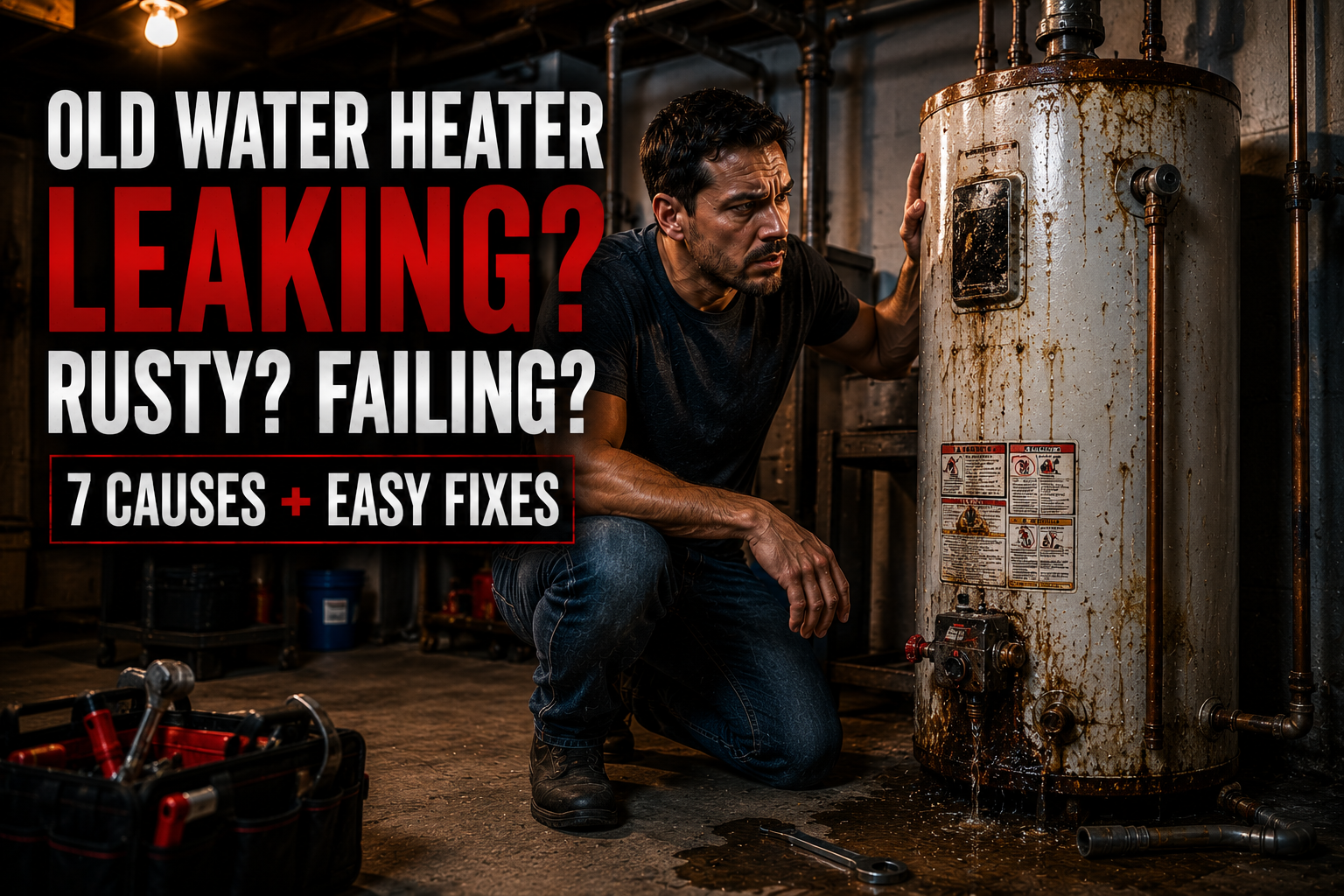
Water pooling around the base of your water heater is a serious warning sign. It usually means the tank itself has developed a crack or is leaking from a corroded fitting. A leaking tank cannot be repaired — it must be replaced before it causes serious water damage to your home.
Exception: Check that the leak is not coming from a loose fitting or the pressure relief valve — these can be repaired without replacing the tank.

Sign 4: Rumbling, Banging, or Popping Noises
As covered in our water heater noise guide, loud rumbling and banging sounds indicate severe sediment buildup. If flushing the tank does not eliminate the noise, the sediment has hardened into a thick layer that permanently reduces efficiency and causes the tank to overheat — shortening its remaining lifespan significantly.

Sign 5: Inconsistent or Insufficient Hot Water
If your water heater is struggling to meet your household’s hot water demand — running out quickly, taking too long to recover, or producing water that is warm but never truly hot — and the thermostat and heating elements are functioning correctly, the tank capacity or efficiency has degraded to the point where replacement makes more sense than continued repairs.

Sign 6: Visible Rust or Corrosion on the Tank Exterior
If you can see rust, corrosion, or mineral deposits on the outside of the tank — especially around the fittings, valves, or the base — the tank is deteriorating. External corrosion is a sign of internal corrosion too. Replace before the tank develops a leak.

Sign 7: Increasing Energy Bills
A water heater that is near the end of its life becomes progressively less efficient — using more energy to heat the same amount of water. If your energy bills have been rising but your usage habits have not changed, an aging water heater may be the cause. A new energy-efficient model pays for itself in reduced energy costs over time.

Sign 8: Frequent Repairs
If you have repaired your water heater more than twice in the past two years, it is time to stop spending money on repairs and invest in a replacement. The 50% rule applies: if a repair costs more than 50% of the price of a new water heater, always choose replacement.

Repair or Replace? Use This Simple Rule
| Situation | Recommendation |
|---|---|
| Under 8 years old, one failed part | Repair |
| 8–10 years old, minor issue | Consider both options |
| Over 10 years old, any issue | Replace |
| Rusty water or leaking tank | Always replace |
| Repair cost over 50% of new unit | Always replace |
How Much Does a New Water Heater Cost?
| Type | Unit Cost | Installation | Total |
|---|---|---|---|
| Traditional tank (gas) | $300–$700 | $150–$300 | $450–$1,000 |
| Traditional tank (electric) | $250–$600 | $100–$250 | $350–$850 |
| Tankless (gas) | $500–$1,500 | $300–$500 | $800–$2,000 |
| Tankless (electric) | $300–$700 | $200–$400 | $500–$1,100 |
While tankless water heaters cost more upfront, they last twice as long and use significantly less energy — making them more cost-effective over time.
How to Make Your Water Heater Last Longer
The answer to “how long does a water heater last” is not fixed — proper maintenance can add years to your unit’s life. Here is what to do:
1. Flush the Tank Annually
Drain 3–5 gallons from the tank every year to remove sediment before it hardens. This single step has the biggest impact on longevity.
2. Replace the Anode Rod Every 3–5 Years
The anode rod is a sacrificial metal rod inside the tank that attracts corrosive minerals — protecting the tank walls from rusting. When the rod is depleted, the tank itself starts to corrode. Replacing it costs $20–$50 and can add years to the tank’s life.
3. Test the Pressure Relief Valve Annually
Lift the lever on the T&P valve briefly once a year to make sure it opens and closes properly. A stuck valve can allow dangerous pressure to build up in the tank.
4. Insulate the Tank and Pipes
Wrap the tank with an insulating blanket ($20–$30) and insulate the first 2 feet of hot and cold water pipes. This reduces heat loss and means the heater runs less often — extending its lifespan.
5. Set the Temperature Correctly
Keep the thermostat at 120°F (49°C). Higher temperatures accelerate sediment buildup, increase pressure, and put unnecessary strain on the tank and components.
6. Install a Water Softener
If you live in a hard water area, a water softener dramatically reduces mineral deposits in the tank — one of the main causes of premature failure.
When to Call a Professional
Call a licensed plumber if:
- Your water heater is leaking from the tank body
- Hot water is rusty or discolored
- The pressure relief valve releases water continuously
- You are ready to install a new water heater — especially tankless models which require gas line or electrical upgrades
For more information on water heater efficiency and choosing the right replacement, visit Energy.gov.
Final Thoughts
So how long does a water heater last? On average, a traditional tank water heater lasts 8–15 years depending on the type, water quality, and how well it is maintained. A tankless unit can last 20+ years with proper care. Watch for the eight warning signs above, maintain your unit annually, and you will always know exactly when it is time for a replacement — before it fails unexpectedly.
Is your water heater showing any of these warning signs? Leave a comment and tell us how old yours is and what problems you are seeing!
Leave a Reply